
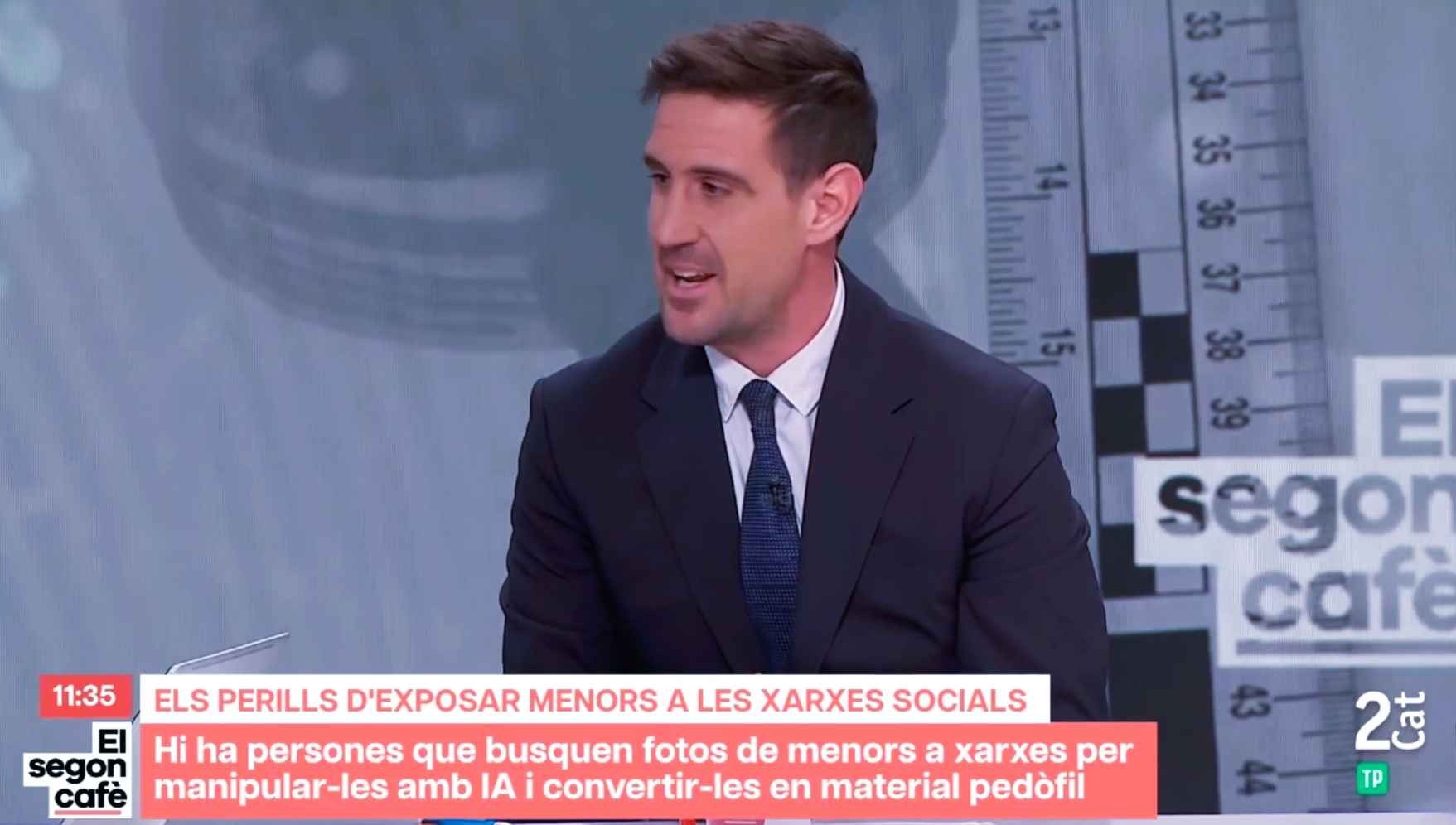
The head of the Criminal Law Department at Vosseler Abogados, lawyer Daniel Salvador, appeared on the TVE-Catalunya program 'El segon cafè' to explain the legal challenges that arise in a topic as complicated as it is universal: the exposure of minors on social networks.
Daniel Salvador broke down the legal keys to understand the extent of parental and platform responsibility and what legal tools are available.
1. Is there real legal protection for families?
The answer is yes, but with important nuances. The legal system offers protection mechanisms based on the fundamental rights of minors and, in the most serious cases, through criminal law.
However, Daniel Salvador warns of a complex reality: "Technology and social media are advancing much faster than the law. Currently, legal tools tend to be reactive: they act once the damage has already been done."
2. The 14-year barrier: autonomy and privacy
A critical point is the legal age in Spain. From the age of 14, minors acquire the right to the protection of their own data and their privacy.
- Before the age of 14: The responsibility for opening profiles or managing digital presence rests entirely with the parents or guardians.
- After the age of 14: The minor is already entitled to privacy from third parties, and even from his own parents.
3. The legal loophole of overexposure ('Sharenting')
Currently, there is no law preventing parents from posting images of their minor children. This is known as an ethical legal vacuum, where the responsibility lies with the parents' judgment. However, it is legally possible to demand the removal of images from other adults or platforms when the material is:
- Humiliating or degrading.
- It seriously affects the privacy of the minor.
- It was published without the express authorization of both guardians.
4. Responsibility of platforms and AI
Are social media platforms responsible for what is published on them? Generally speaking, they are not in the first instance. However, their responsibility arises when, after receiving a complaint or request to remove sensitive material, they fail to act with due diligence.
Regarding Artificial Intelligence (as in the recent case of Grok, from the X platform), the legal debate is raging. Although AI does not have its own legal personality, the Public Prosecutor's Office is already investigating criminal and administrative liabilities for the promoters and directors of these technologies when they fail to implement filters to prevent sexist or degrading content.
5. Is it legal to spy on our children's mobile phones?
This is one of the most frequently asked questions. Daniel Salvador is clear: There is no automatic and unlimited right for parents to access their children's email or social media, even if they are minors.
Access is only permitted under two conditions:
- Existence of a well-founded suspicion that the minor is being victimized by a crime.
- Need for protection: When the duty of guardianship prevails over privacy in order to safeguard the physical or moral integrity of the minor. "Gossiping" out of mere curiosity could violate the minor's rights.
Conclusion: The golden rule before publishing
Beyond the courts, prevention is the best defense against the exposure of minors on social media. Before uploading any content to the internet, as a society and as families, Daniel Salvador suggests we ask ourselves a fundamental question: "Is this really necessary?"
Has your family been affected by the misuse of images online, or do you need advice on cybercrime ? At Vosseler Abogados, we specialize in Criminal Law and the protection of fundamental rights.
Contact our team for a personalized consultation
