
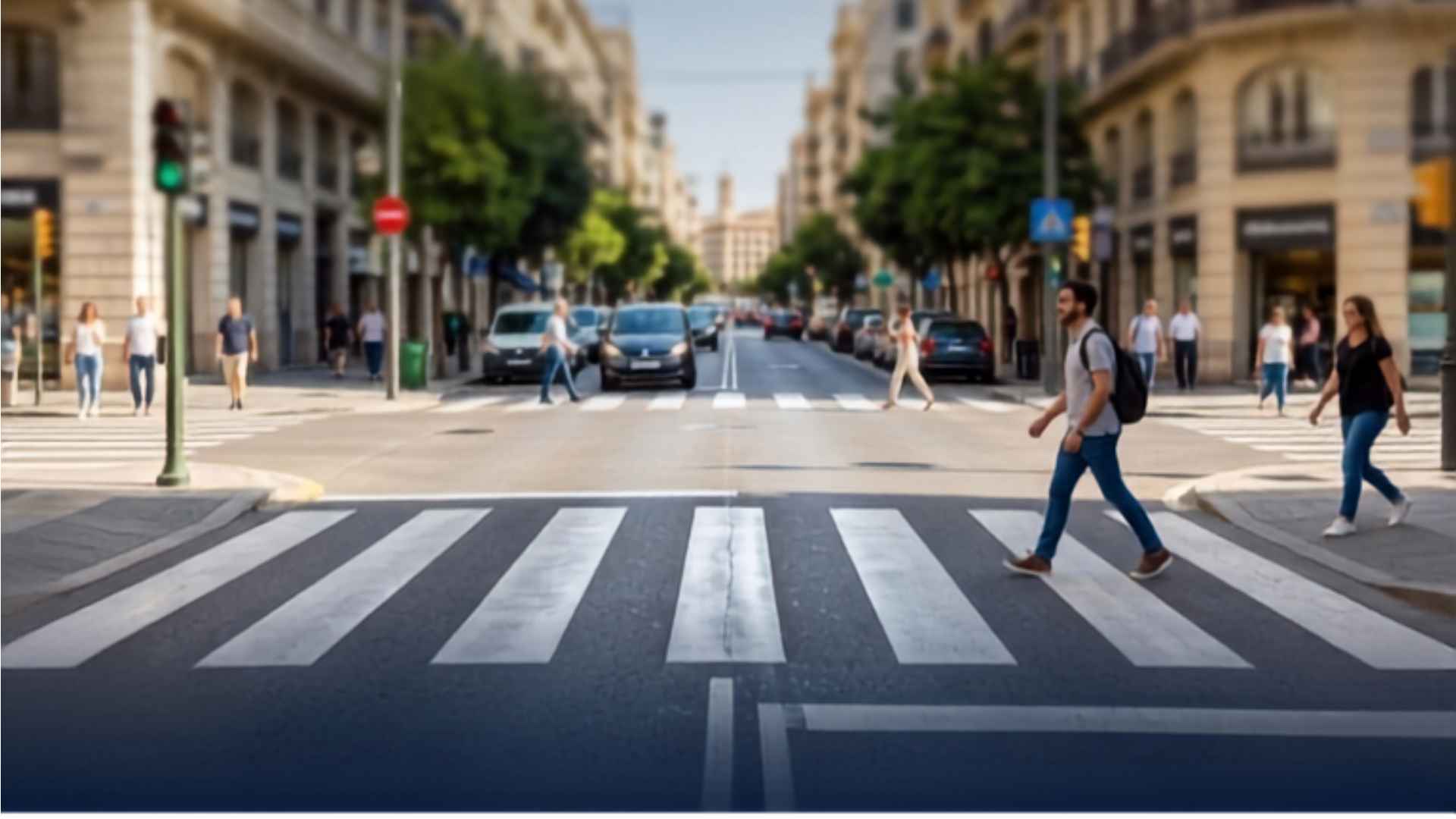
This Monday, August 17, World Pedestrian Day was celebrated around the globe , a key date on the road safety calendar whose history dates back to 1897. It was on that date that the first documented traffic accident with a pedestrian victim was recorded in London, England. This person was Bridget Driscoll , 44, who died after being hit by a car.
World Pedestrian Day is a decentralized initiative of uncertain origin. However, various associations, government bodies, and professionals use it as a key tool to promote road safety awareness, create safer urban spaces, and raise awareness about sustainable mobility.
The reality of hit-and-runs: a figure for reflection
Walking is the most natural, ecological, and healthy way to get around our cities. However, pedestrians remain the most vulnerable users of public roads.
In Spain, there are approximately 12.500 accidents involving pedestrians each year . This significant figure highlights the ongoing need for extreme caution, both on the part of drivers and pedestrians themselves.
The primary objective of this day is not only to remind people of the legal and civic obligations involved in walking, but also to assert the right to have adapted and protected urban infrastructure.
How to be a responsible pedestrian and prevent accidents?
Just as drivers are subject to the General Traffic Regulations, pedestrians also have fundamental behavioral guidelines to ensure their safety and avoid risky situations.
From Vosseler Abogados , we summarize the main recommendations that every pedestrian should keep in mind:
- Always cross at pedestrian crossings: The zebra-shaped markings on the roadway indicate the safe and priority route for pedestrians. Always avoid crossing between parked vehicles or at unauthorized points.
- Respect the pedestrian traffic light: Pedestrians often focus on the vehicle traffic light instead of the pedestrian signal. Always make sure you cross when the pedestrian silhouette is green.
- Look both ways before moving forward: Even on one-way streets or controlled crossings, visually ensure that vehicles have come to a complete stop before taking the first step.
- Make use of pedestrian walkways and bridges: On high-traffic roads or expressways, these infrastructures are essential to guarantee a grade-separated crossing without endangering lives.
- Avoid distractions with your mobile phone: Using a smartphone while walking drastically reduces reaction time and awareness of your surroundings. If you need to reply to a message or make a call, it's advisable to stop in a safe place on the sidewalk.
- Avoid using headphones while traveling: To anticipate any danger, it's essential to keep all your senses focused on the road. Using headphones at high volume prevents you from hearing honking horns, braking, and the approach of quiet vehicles (such as bicycles, electric scooters, or hybrid and electric cars).
- Make yourself visible at night (light or reflective clothing): If you are walking at night or in poorly lit areas, try to wear light-colored clothing or reflective items that make it easier for drivers to see you from a distance.
Commitment to the safety and rights of victims
Prevention and road safety education are the most effective tools for reducing accident rates on our streets. Reminding pedestrians of their responsibilities contributes to a harmonious and safe coexistence on the roads.
At Vosseler Abogados , as specialists in the defense of victims of traffic accidents , we join in the commemoration of this World Pedestrian Day, reaffirming our commitment to road safety, the protection of the most vulnerable and comprehensive legal advice to those who have suffered an accident on public roads.
