
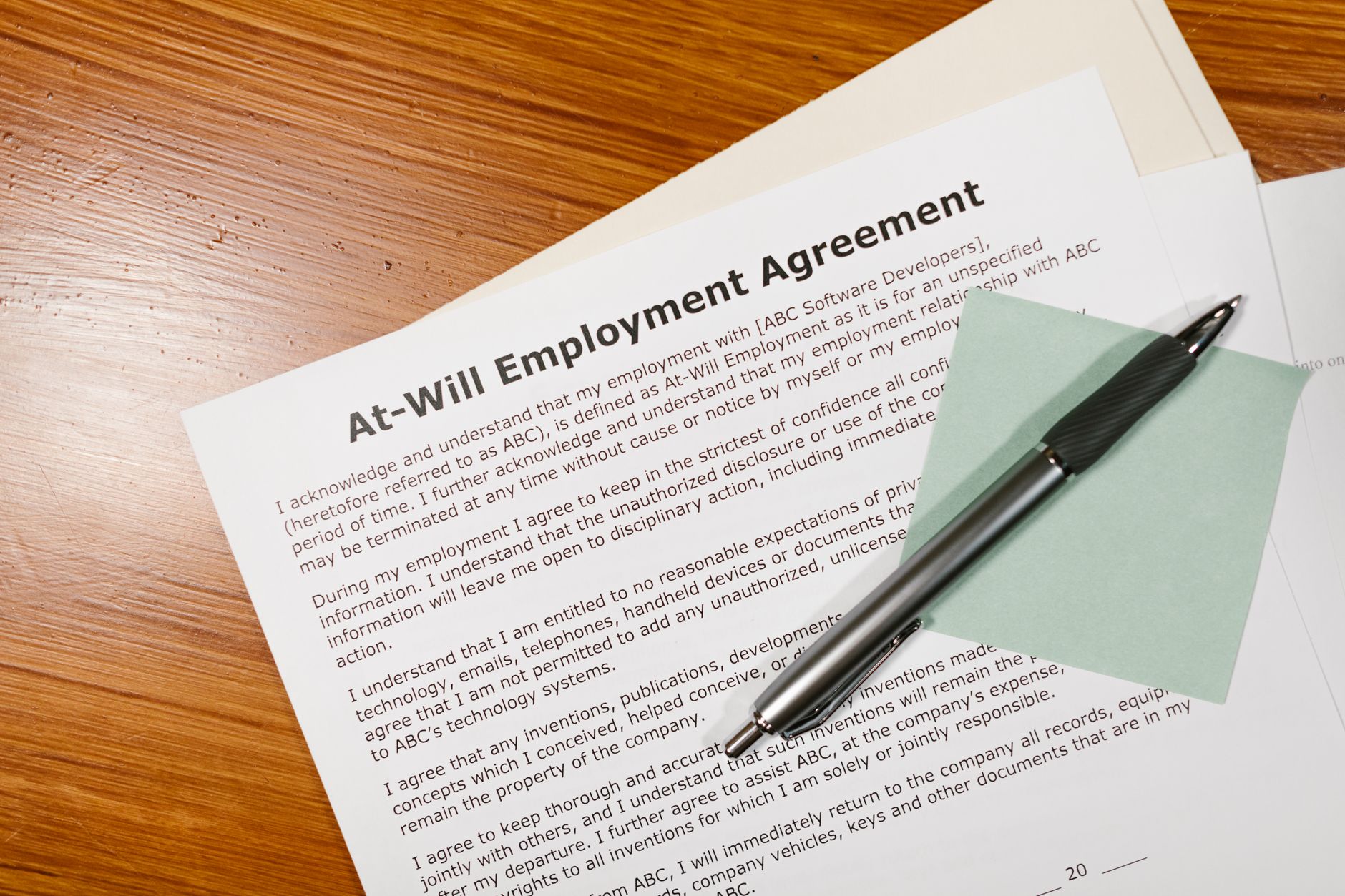
Receiving a notification from your company informing you of a change in your working conditions can generate a lot of uncertainty. Are you obligated to accept it? Do you have any rights? Substantial modification of working conditions is a legal concept regulated by the Workers' Statute, which, if not applied correctly, can violate fundamental employee rights. In this article, we explain what it is, the different types that exist, and, above all, what options you have when the company decides to change the rules.
What is meant by a substantial modification of working conditions?
Article 41 of the Workers' Statute defines this mechanism as the employer's right to alter certain working conditions when there are proven economic, technical, organizational, or production-related reasons . However, not just any change qualifies: it must be a significant alteration that substantially affects the worker.
The law considers substantial modifications to include, among others, those that affect:
- The working day (schedule, distribution, shifts).
- Salary and the amount of supplements.
- The work and performance system.
- Functions, when they exceed the limits of article 39 of the ET (functional mobility).
- The workplace, if it involves a relocation.
It is important to distinguish this figure from simple minor adjustments or the ordinary management power of the employer, which do not require following this procedure.
Types: individual and collective
The modification can be individual or collective , and the procedure varies considerably depending on the type.
Individual substantial modification
This applies when the change affects one employee or a small number of employees that does not exceed the legal thresholds. The company must notify the employee and, where applicable, their legal representatives, at least 15 days before the change takes effect. During this period, the employee can analyze the situation and decide what to do.
Substantial collective modification
A measure is considered collective when the number of affected workers exceeds certain thresholds established in the Workers' Statute (for example, ten workers in companies with up to one hundred employees). In this case, the company must open a consultation period of at least 15 days with the workers' representatives, with the aim of reaching an agreement. If no agreement is reached, the company may implement the measure, but the possibility of appeal remains open.
What can you do if you disagree?
Here's the most relevant part for most employees. When you receive a notification of a substantial change in your working conditions, you basically have three options :
1. Accept the change
You can choose to accept the new conditions and remain in your position. This does not imply waiving any future claims if you detect irregularities in the procedure, but it does complicate certain avenues of appeal. In any case, acceptance must be informed, not based on ignorance or coercion.
2. Appeal the decision before the labor court
If you believe the change is unjustified, that the procedure was not followed correctly, or that the measure is disproportionate, you can challenge it in court . The deadline for filing a lawsuit is 20 business days from the date the change is notified or takes effect. If the judge declares the change unjustified, the company must reinstate the original conditions, and depending on the case, you may be entitled to compensation.
These types of labor disputes require a rigorous analysis of the case. If you want to learn how a specialized team handles complex situations in the workplace, you can see a real-life example in the case of Raúl, a serious workplace accident that continues to generate debate.
3. Terminate the contract with compensation
This is perhaps the least known option, but also one of the most important. If the change significantly disadvantages you, you have the right to terminate your contract and receive severance pay of 20 days' salary per year of service , up to a maximum of nine months' salary. This option must be exercised within the 15-day notice period before the change takes effect, or at the time the change is communicated to you.
Note: If after accepting the modification you detect serious harm, there is also the possibility of resorting to rescission for damages under article 50 of the ET, although the standard of proof is more demanding.
Common employer errors that may invalidate the measure
Not all substantial modifications are properly articulated. There are common errors that can lead the judge to declare them unjustified or null and void:
- Lack of causal justificationThe company does not provide evidence for the economic or organizational reasons it claims.
- Failure to provide prior notice: the minimum period of 15 days is not respected or it is communicated verbally without written record.
- Omission of the consultation period in collective modifications.
- Covert modificationThe company implements gradual changes to avoid the formal procedure.
- Discrimination or violation of fundamental rights: if the modification disproportionately affects a protected group.
Detecting these errors requires experience and knowledge of current case law. On the Vosseler Abogados blog, you'll find analyses of labor law issues and other areas of law that can guide you through various situations.
The role of workers' representatives
In collective bargaining agreements, employee representatives or the works council play a fundamental role. Their participation in the consultation period is not a mere formality: they can negotiate conditions, request documentation justifying the measure, and, if necessary, collectively challenge the decision if the process has not been carried out in accordance with the law.
If you are a union representative or staff delegate and you are facing this type of process, having specialized legal advice from the beginning can make all the difference in the outcome of the negotiations.
When is it especially advisable to consult a lawyer?
Often, employees affected by a substantial change in circumstances wonder whether it's worth seeking legal advice. The answer is almost always yes, especially when:
- The change affects salary or bonuses.
- Changing your work schedule impacts your family life or work-life balance.
- You suspect that the measure is retaliation or has a discriminatory motivation.
- You have not received the written communication or the required advance notice.
- The company intends to implement the change immediately.
Deadlines in labor law are very strict. Missing the 20-day period to appeal can mean definitively forfeiting that option. Therefore, acting quickly from the moment of notification is crucial.
At Vosseler Abogados, we have a team specializing in labor law that analyzes each situation individually, assessing the realistic possibilities before recommending any course of action. Our commitment to rigorous yet personalized legal practice is also reflected in our participation in initiatives such as the international Lex Fellowship program , where we collaborate in the training of new legal professionals.
A practical tip before making any decision
If you've just received notification of a substantial change in your working conditions, the first thing you should do is not sign anything without understanding what it entails . Many companies include a section in the notification indicating your agreement, which, if signed, could be interpreted as express acceptance of the new terms. Keep all documents received, note the dates, and if you have affected colleagues, coordinate with them.
Labor law protects workers, but that protection is only effective when exercised promptly and with adequate information. Knowing your options before deadlines expire is the difference between defending your rights and losing them without realizing it.
